
Psoas Stretch PDF: A Comprehensive Guide
Discover effective psoas stretches in a convenient PDF format! This guide offers relief from tightness, improves posture, and reduces lower back tension,
with video tutorials available.
Understanding the Psoas Muscle
The psoas, often called the “muscle of the soul,” is a deep core muscle connecting the lumbar spine to the femur. It’s actually comprised of the psoas major and iliacus muscles, working together as the iliopsoas. Understanding its function is crucial; it influences posture, movement, and even emotional well-being.
Tightness in the psoas can stem from prolonged sitting, poor posture, or repetitive movements. This impacts pelvic alignment, potentially leading to anterior pelvic tilt and lower back pain. A psoas stretch PDF can be an invaluable resource for learning techniques to address this. Recognizing the muscle’s role in stabilizing the spine and facilitating hip flexion is key to targeted stretching and rehabilitation. Ignoring psoas health can contribute to chronic discomfort and limited mobility, making proactive care essential.
What is the Psoas and Why Does it Matter?
The psoas is a core muscle running from the lumbar spine, through the pelvis, to the femur – a vital link between upper and lower body. Its primary function is hip flexion, bringing your knee towards your chest, but it also stabilizes the spine and influences posture. Why does it matter? A tight psoas restricts movement, contributes to lower back pain, and can even affect breathing mechanics.
A psoas stretch PDF provides accessible guidance to counteract these issues. Because the psoas connects major body parts, its health impacts overall well-being. Tightness often results from prolonged sitting or intense physical activity. Addressing psoas tension improves posture, reduces pain, and enhances athletic performance. Ignoring it can lead to chronic discomfort and limited mobility, highlighting the importance of targeted stretches and rehabilitation exercises.
Common Causes of Psoas Tightness
Several factors contribute to psoas muscle tightness, often necessitating a psoas stretch PDF for relief. Prolonged sitting, a common modern habit, shortens the muscle and restricts its natural length. This is especially prevalent in desk jobs or long commutes. Intense physical activity, particularly running or cycling, can also overwork and tighten the psoas.
Furthermore, poor posture, such as anterior pelvic tilt, places constant strain on the muscle. Stress can also manifest physically, causing the psoas to tense up as a protective mechanism. Post-surgical conditions, like hip arthroscopy with psoas release, require specific rehabilitation to prevent re-tightening. Understanding these causes is crucial for preventative care and targeted stretching routines, ensuring optimal muscle function and minimizing discomfort. A comprehensive PDF guide can address these specific needs.
Symptoms of a Tight Psoas
Recognizing the signs of a tight psoas is the first step towards relief, often found within a helpful psoas stretch PDF. Lower back pain is a primary symptom, frequently mistaken for other issues. This tightness can also contribute to pain in the hips, groin, and even the knees. Individuals may experience limited range of motion in the hips, making activities like walking or climbing stairs difficult.
Additionally, a tight psoas can cause postural imbalances, leading to an exaggerated curve in the lower back. Digestive issues, such as bloating or constipation, can also arise due to the muscle’s proximity to abdominal organs. Some may notice a “pulling” sensation in the front of the hip. A detailed PDF guide can help you identify these symptoms and begin a targeted stretching program for effective management.
Psoas Stretches: Techniques & Exercises
Explore a variety of psoas stretches – seated, kneeling, standing, supine, and quadruped – detailed in a PDF guide for optimal hip flexor release.
Seated Psoas Stretch

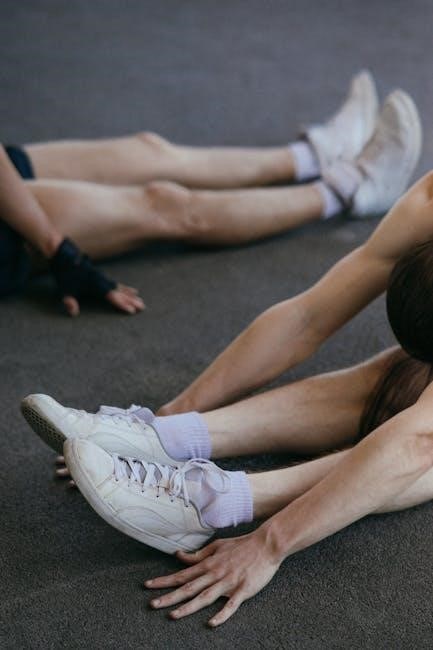
Begin by sitting on the floor with your legs extended straight out in front of you. Gently bend one knee, bringing your foot towards your inner thigh. Maintain a straight back and engage your core. Lean forward from your hips, keeping your spine long, until you feel a stretch in the front of your hip of the bent leg.
Hold this position for 20-30 seconds, breathing deeply. Ensure your back remains straight and avoid rounding. Repeat this stretch 3 times on each leg. This stretch is excellent for beginners and can be easily modified. A PDF guide often illustrates proper form, emphasizing a relaxed back and focused stretch in the hip flexor.
Remember to avoid pushing yourself beyond your comfortable range of motion. If you experience any pain, stop immediately. This seated stretch is a foundational exercise for releasing psoas tension, as detailed in many downloadable resources.
Kneeling Psoas Stretch
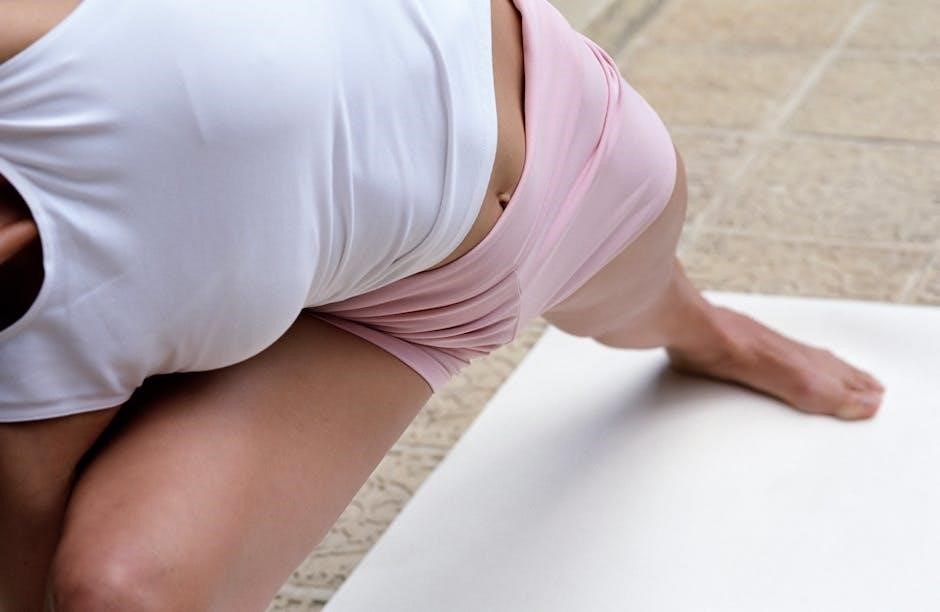
Start in a kneeling position with your right knee on the ground and your left foot flat on the floor in front of you, forming a 90-degree angle. Gently push your hips forward, maintaining a straight back and engaged core. You should feel a stretch in the front of your right hip.
To deepen the stretch, slightly arch your back and reach your arms overhead. Hold this position for 20-30 seconds, breathing deeply. Repeat 3 times on each side. Many PDF guides emphasize keeping the core engaged to protect the lower back.
Ensure your front knee doesn’t extend past your ankle. This stretch effectively targets the psoas and iliacus muscles. Avoid forcing the stretch; listen to your body. A visual guide, often found in downloadable PDFs, can help ensure correct alignment and maximize the stretch’s benefits.
Standing Psoas Stretch
Begin by standing tall with your feet hip-width apart. Step forward with one leg into a lunge position, ensuring your front knee is bent at a 90-degree angle and aligned over your ankle. Keep your back leg straight and your core engaged.
Gently tuck your tailbone under and slightly push your hips forward, feeling a stretch in the front of your hip of the back leg. Raise the arm on the same side as the back leg overhead to enhance the stretch. Hold for 20-30 seconds, breathing deeply.
Many PDF resources recommend maintaining a neutral spine throughout the stretch. Repeat 3 times on each side. This standing variation is accessible and can be easily incorporated into a daily routine. Detailed illustrations in PDF guides often demonstrate proper form, helping to avoid strain and maximize effectiveness.
Supine Psoas Stretch (Heel Slides)
Lie on your back with your knees bent and feet flat on the floor. Engage your core to stabilize your lower back. Slowly slide one heel away from your body, straightening your leg while keeping your lower back pressed into the floor.
Focus on feeling a stretch in the front of your hip and thigh. Avoid arching your back; maintain a neutral spine throughout the movement. Hold the stretch for 20-30 seconds, breathing deeply.
Many psoas stretch PDF guides illustrate this exercise, emphasizing the importance of controlled movements. Return to the starting position and repeat with the other leg. Perform 3-5 repetitions on each side. This gentle stretch is ideal for beginners and post-surgery rehabilitation, as detailed in hip arthroscopy protocols often found in PDF formats.
Quadruped Psoas Stretch (Partial Rocking)
Begin on your hands and knees, ensuring your hands are directly under your shoulders and your knees are under your hips. Maintain a neutral spine, avoiding rounding or arching your back. Gently rock your hips backward, shifting your weight towards your heels, while keeping your core engaged.
This movement creates a stretch in the front of your hip, targeting the psoas muscle. Focus on a controlled, gentle rocking motion, not forcing the stretch. Many psoas stretch PDF resources highlight this exercise as beneficial for hip flexor flexibility.
Hold the stretch for a few seconds at the peak of the backward rock, then return to the starting position. Repeat 10-15 times. Rehabilitation protocols, like those following hip arthroscopy, often include this exercise, as detailed in PDF guides, to improve hip flexion and range of motion.
Psoas Release & Rehabilitation
Explore post-surgery rehabilitation, active motion exercises, leg raises, and adduction techniques – all detailed in comprehensive psoas stretch PDF guides for optimal recovery.
Post-Surgery Psoas Rehabilitation (Hip Arthroscopy)
Following hip arthroscopy with psoas release, a structured rehabilitation program is crucial for regaining optimal function. Initial exercises, often outlined in a post-operative psoas stretch PDF, focus on gentle hip flexion using heel slides and hook lying positions. Quadruped rocking, progressing to 60-90 degrees, aids in restoring range of motion.
Progressive exercises include hip extension – initially to neutral, then with knee flexion and extension, utilizing a pillow for support. Active knee flexion and hip abduction/adduction, performed in supine, prone, and sidelying positions, are also key components. A detailed PDF resource will often illustrate these movements.
The goal is to gradually increase strength and flexibility, minimizing pain and preventing complications. Adhering to a physiotherapist’s guidance and utilizing a psoas stretch PDF for home exercises is vital for a successful recovery. Remember to listen to your body and avoid overexertion.
Active Range of Motion Exercises
Initiating active range of motion (AROM) exercises is a cornerstone of psoas rehabilitation, often detailed within a comprehensive psoas stretch PDF. These movements, performed independently by the patient, aim to restore joint mobility and muscle function. Begin with gentle heel slides while supine, focusing on controlled hip flexion and extension.
Gradually incorporate active knee flexion, ensuring a pain-free range. Hip abduction and adduction, performed lying down, further enhance mobility. A psoas stretch PDF will typically demonstrate proper form for each exercise.
Remember to prioritize quality over quantity, performing each movement slowly and deliberately. As strength improves, progress to standing AROM exercises. Consistent adherence to a prescribed exercise plan, guided by a PDF resource and a physiotherapist, is essential for optimal recovery and preventing re-injury.
Leg Raises & Adduction Exercises
Leg raises and adduction exercises are crucial components of psoas rehabilitation, often outlined in a detailed psoas stretch PDF. These exercises target the hip flexors and adductors, strengthening muscles surrounding the psoas. Begin with basic leg raises, maintaining a neutral spine and controlled movement.
Progress to adduction exercises, bringing the leg towards the midline while lying supine. A psoas stretch PDF will illustrate proper technique to avoid compensatory movements. Single leg raises add a challenge, enhancing core stability.
Utilizing a sports cord for resisted adduction provides an additional strengthening element, as described in rehabilitation protocols. Remember to focus on controlled execution and avoid pain. A PDF guide should specify repetitions and sets, tailored to individual progress and guided by a qualified professional.
Single Leg Sports Cord Leg Press
Single leg sports cord leg presses are a valuable exercise detailed within comprehensive psoas stretch PDF rehabilitation programs, particularly post-hip arthroscopy with psoas release. This exercise strengthens the hip flexors and adductors in a functional manner, mimicking real-life movements.
Position yourself in a long-sitting posture, securing a sports cord around your foot. Press through the heel, extending the leg against the cord’s resistance. A psoas stretch PDF will emphasize limiting hip excursion to focus on controlled hip flexion.
Maintaining a stable core and avoiding excessive lumbar flexion is vital. Protocols often recommend starting with minimal resistance, gradually increasing it as strength improves. This exercise, as outlined in rehabilitation PDFs, aids in restoring optimal hip function and psoas muscle control.
Integrating Psoas Stretches into a Routine
Incorporate psoas stretches daily, alongside warm-up and cool-down exercises, for optimal results. A psoas stretch PDF can guide frequency and duration for lasting relief.
Frequency and Duration of Stretches
Determining the ideal frequency and duration of psoas stretches depends on individual needs and tightness levels. A psoas stretch PDF often recommends starting with daily stretching, holding each stretch for 20-30 seconds.

For those experiencing significant tightness or lower back pain, 2-3 times daily may be beneficial. Consistency is key; even short, regular sessions are more effective than infrequent, lengthy ones. Listen to your body and avoid pushing beyond a comfortable range of motion.
Initially, aim for 3 repetitions of each stretch. As flexibility improves, you can gradually increase the hold time to 60 seconds or add additional repetitions. Remember to breathe deeply throughout each stretch, promoting relaxation and deeper muscle release. Utilizing a PDF guide ensures proper form and progression.
Warm-up Exercises Before Stretching
Prior to performing psoas stretches – as detailed in a comprehensive psoas stretch PDF – a proper warm-up is crucial to prepare the muscles and minimize the risk of injury. Begin with 5-10 minutes of light cardiovascular activity, such as stationary biking or walking, to increase blood flow to the hip flexors.
Dynamic stretches are particularly effective. Include leg swings (forward, backward, and sideways), hip circles, and torso twists. These movements gently increase range of motion and prepare the psoas for deeper stretching.
Additionally, consider incorporating active range of motion exercises, like heel slides or gentle knee extensions, to further activate the muscles. A well-executed warm-up enhances the benefits of psoas stretching and promotes safer, more effective results, as outlined in many PDF guides.
Cool-down Exercises After Stretching
Following a psoas stretching routine – whether guided by a psoas stretch PDF or a physical therapist – a cool-down is essential for gradually returning muscles to their resting state. Begin with 5 minutes of gentle, static stretching, holding each stretch for 20-30 seconds. Focus on the hip flexors, quads, and hamstrings.
Include exercises like supine knee-to-chest stretches or gentle hip rotations. These help to lengthen the muscles and improve flexibility. Light walking can also aid in reducing muscle soreness and promoting recovery.
Remember to breathe deeply throughout the cool-down, promoting relaxation and reducing muscle tension. A proper cool-down, complementing the stretches found in a psoas stretch PDF, prevents stiffness and supports long-term muscle health, ensuring continued mobility and comfort.
Psoas Strengthening Exercises
Strengthen your iliopsoas with hip flexion, extension, abduction, and adduction exercises, building core stability and complementing your psoas stretch PDF routine.
Iliopsoas Strengthening Exercises
Targeting the iliopsoas directly is crucial for balanced muscle function and preventing future tightness. Strengthening this key hip flexor supports proper posture and movement patterns, enhancing the benefits of your psoas stretch PDF routine. Begin with foundational exercises like supine hip flexion, gently lifting your leg while keeping your lower back pressed into the floor.
Progress to more challenging movements, incorporating resistance bands for increased intensity. Consider exercises performed in long sitting, utilizing a sports cord to provide controlled resistance during leg raises and adduction. These exercises specifically address the iliopsoas, promoting strength and stability. Remember to maintain proper form throughout each exercise to avoid strain and maximize effectiveness.
Focus on controlled movements and engage your core throughout, ensuring the iliopsoas is the primary mover. Consistent strengthening will complement your stretching efforts, leading to long-term improvements in hip flexibility and lower back health.
Hip Flexion Exercises
Hip flexion exercises are fundamental for rehabilitating and strengthening the muscles surrounding the hip joint, directly impacting the psoas and complementing your psoas stretch PDF regimen. Begin with simple heel slides while lying supine, focusing on controlled movement and maintaining a neutral spine. Progress to hook lying hip flexion, bringing your knee towards your chest while keeping your back flat.
Quadruped hip flexion, involving partial rocking backward, further engages the hip flexors while promoting core stability. These exercises can be modified based on individual tolerance and progress. Remember to prioritize proper form over range of motion, especially during initial stages of rehabilitation.
Gradually increase the difficulty by adding resistance or incorporating dynamic movements. Consistent hip flexion exercises will enhance hip mobility, improve functional movement, and contribute to a stronger, more resilient lower body.
Hip Extension Exercises
Hip extension exercises are crucial for balancing the work of the hip flexors, particularly after addressing psoas tightness with stretches from your psoas stretch PDF. Start with prone hip extensions, gently lifting your leg while keeping your knee slightly bent and a pillow under your hips for comfort. Focus on squeezing your glutes throughout the movement.
Progress to hip extensions in neutral, then with the knee flexed to 90 degrees, and finally fully extended, ensuring controlled motion. Active knee flexion can also be incorporated to further engage the hamstring muscles. These exercises help counteract the shortening effect of a tight psoas.
Remember to maintain a neutral spine and avoid overextending your lower back. Consistent hip extension work will improve glute strength, enhance pelvic stability, and contribute to a more balanced and functional hip complex.
Resources & Further Information
Access a downloadable psoas stretch PDF, explore video tutorials, and locate qualified physiotherapists for personalized guidance on lower back pain relief.
Psoas Stretch PDF Download
Unlock a comprehensive psoas stretch guide with our readily available PDF download! This valuable resource consolidates all the essential stretches and exercises discussed, offering a convenient, portable reference for your personal practice.
Within the PDF, you’ll find clear, step-by-step instructions accompanied by illustrative images, ensuring proper form and maximizing the benefits of each stretch. It’s designed for all fitness levels, from beginners to experienced practitioners.
The PDF also includes helpful tips on integrating these stretches into your daily routine, understanding the frequency and duration for optimal results, and recognizing potential contraindications. Coach Sofia Fitness provides a particularly useful PDF alongside her video tutorials, making learning and implementation seamless. Download today and begin your journey towards a healthier, more flexible you!
Video Tutorials for Psoas Stretches
Enhance your understanding and technique with our curated collection of video tutorials for psoas stretches! Visual learning is key, and these videos demonstrate each stretch with precision, guiding you through proper form and alignment.
These tutorials break down complex movements into easily digestible steps, ensuring you can safely and effectively target the psoas muscle. Coach Sofia Fitness offers a complete video tutorial encompassing a range of stretches designed to relieve tightness and improve posture.
Watch as qualified instructors demonstrate the seated, kneeling, standing, and supine variations, providing modifications for different flexibility levels. These videos complement the PDF guide, offering a dynamic learning experience. Access these resources to maximize your results and minimize the risk of injury, paving the way for lasting relief and improved mobility!
Finding a Qualified Physiotherapist
Navigating psoas tightness can sometimes require professional guidance. A qualified physiotherapist can provide a personalized assessment and treatment plan tailored to your specific needs. They can accurately diagnose the root cause of your discomfort and develop a targeted rehabilitation program.
Seeking expert help is particularly crucial post-surgery, such as after hip arthroscopy with psoas release, where a structured rehabilitation protocol – including exercises like hip flexion and leg raises – is essential for optimal recovery.
Physiotherapists at clinics like the Sports Medicine Clinic Royal Infirmary of Edinburgh specialize in musculoskeletal conditions and can guide you through appropriate exercises and stretches. Don’t hesitate to consult a professional if your pain persists or worsens, ensuring a safe and effective path to recovery and long-term well-being.
Additional Resources for Lower Back Pain Relief
Beyond psoas stretches, numerous resources can aid in alleviating lower back pain. Addressing anterior pelvic tilt, often linked to a tight psoas, is key. Explore online platforms like Coach Sofia Fitness for comprehensive guidance and downloadable PDFs detailing effective stretches and exercises.

Consider incorporating active range of motion exercises, as recommended in post-surgical rehabilitation protocols, to improve flexibility and reduce stiffness. Strengthening the iliopsoas muscle, alongside targeted stretches, can provide lasting relief.
Remember to prioritize proper posture and body mechanics in daily activities. If pain persists, consult with a healthcare professional for a thorough evaluation and personalized treatment plan. Combining psoas release techniques with broader lower back care strategies will maximize your chances of achieving long-term comfort and improved mobility.